



Electrical Heat Tracing | Heating tapes, cables & control
More Information
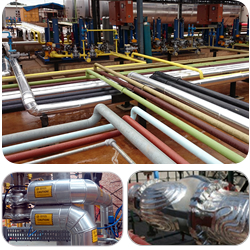
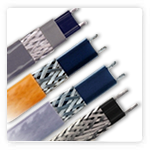
Parallel & serial trace heating cables, control, tank & hopper heaters
APPLICATIONS:
- maintain optimum process temperatures
of liquids, vessels, pipes, valves, gutters & instrument panels - freeze protection
e.g. prevent drain pipes & doors in refrigeration plants from freezing up - preventing chemicals from crystallizing or solidifying
- maintaining low viscosity for easy pumping
- prevent condensation in cabinets and instrument panels
contact us to discuss your requirements.
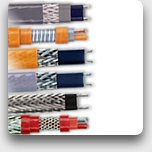
- Parallel conductors,
even heating power (W/m) - Can be cut to any length
- High chemical resistance
- Various temperature range applications up to 210°C
*low - high temperature maintenance (or where steam purging occurs) *foundation heating/ heating of cryogenic storage tanks *freeze protection
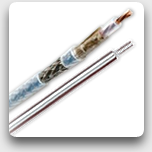
- Single resistance wire
circuit length has direct effect on power output: Wide range of W/m - Factory terminated,
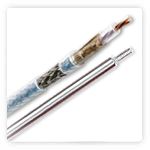
- Flexible or semi-rigid (MI) heating cables: High chemical resistance
- High temperature rating
(up to 500°C)
*medium - high process temperature maintenance of pipes, tanks & equipment
*long lines *freeze protection
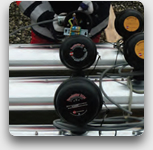

We offer simple & cost-effective heating systems for tanks and hoppers utilizing our heating panels or standing seam insulation systems.
Our hopper heaters are designed to keep the ash dry and free flowing.
Storage tanks often require heating and insulation for temperature conservation or condensate prevention. Thermon manufactures prefabricated standing seam insulation panels and accessories which improve durability, life expectancy and appearance.
Our extensive line of electric heating cables can also be utilized for tank/ vessel heating applications.
Thermon Heating Cables - Quick Selection Guide
For more information & to request a quote, please click on the product image listed below.
| Product | Type | Parallel/ Serie |
max operating temp Power ON (ºC) |
max exposure temp Power OFF (ºC) |
W/m @ 10 ºC | Voltage Range (Vac) | Applications |
 BSX |
Self-Regulating | parallel | 65 | 85 | 9 15 25 32 |
100 - 277 | *process temp maint (low) *no steam clean |
 RSX 15-2 |
Self-Regulating | parallel | 65 | 85 | 48 | 100 - 277 | *process temp maint (low) * suitable for refrigeration & cold storage *no steam clean |
 KSX |
Self-Regulating | parallel | 121 | 121 | 48 64 |
100 - 277 | *process temp maint (medium) *no steam clean |
 HTSX |
Self-Regulating | parallel | 150 | Intermittent: power ON 215, power OFF 250 | 9 18 27 37 48 64 |
100 - 277 | *process temp maint (medium) *steam clean/purge |
 VSX |
Self-Regulating | parallel | 150 |
Intermittent: power ON 232, power OFF 250 |
15 32 48 64 |
100 - 277 | *process temp maint (medium - high) *steam clean/purge |
 HPT |
Power-Limiting | parallel | 215 | 260 | 15 30 45 60 |
100 - 480 | *process temp maint (medium - high) *steam clean/purge |
 FP |
Constant Wattage Polymer | parallel | 65 | 200 | 8, 16, 33 W/m | 120/ 200 | *low process temperature maintenance *no steam clean |
 TESH |
Constant Wattage Polymer | series | 260 | 260 | 25 max | up to 750 | *long line *process temp maintenance |
 MIQ |
Constant Wattage MI | series | 500 | 650 280 * 350 ** 650 *** |
260 max | 300-500 | *high temp exposure *high temp maintenance |